A padlock might look simple, but when you’ve lost the key or it refuses to open, it quickly turns into a frustrating problem. Luckily, there are safe ways to regain access without panic, whether it’s on a garden gate, storage unit, or toolbox.
Step 1: Check the Basics
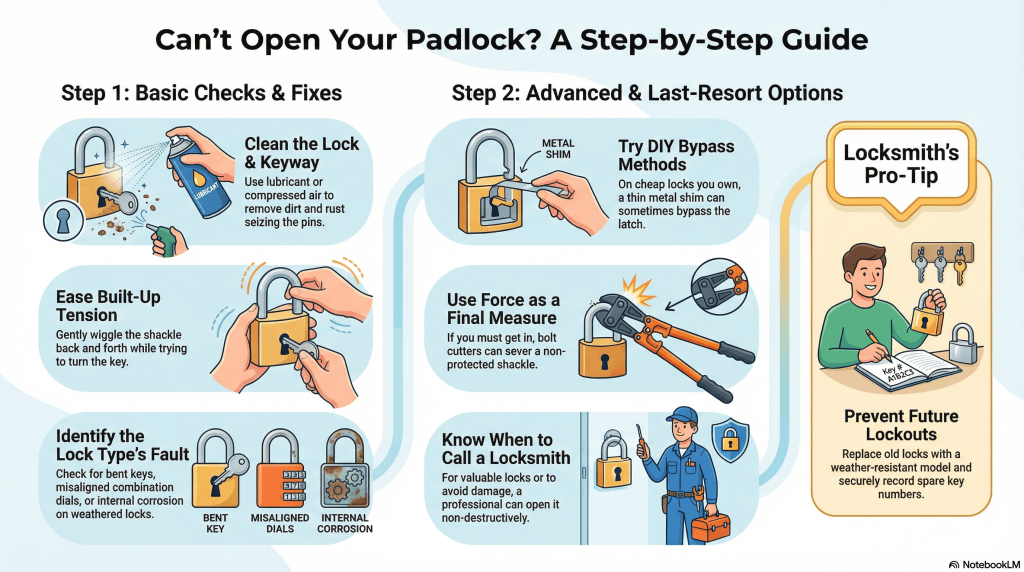
Clean the padlock and keyway with a little lubricant or compressed air. Dirt and rust can seize internal pins, so cleaning them out can help.
Gently wiggle the shackle while turning the key; many jammed locks release after easing off built‑up tension.
Step 2: Identify the Padlock Type
Keyed padlocks:
Use a spare key if available or inspect for a bent or worn key that may not engage properly.
Combination padlocks:
Try resetting the code or checking if the dials are slightly misaligned.
Weathered padlocks:
Apply penetrating oil and lightly tap the body with a rubber mallet to loosen internal corrosion.
Step 3: DIY Options (Last Resort)
If you need immediate access and it’s your own property, you can:
- Use a shim, which is a thin piece of metal slid between the shackle and lock body, to bypass the latch on cheaper models.
- Use a small pick and tension wrench to manually release the pins, but only on locks you lawfully own.
- As a final measure, a pair of bolt cutters can sever the shackle if the lock has no anti‑cut protection.
Step 4: Call a Locksmith
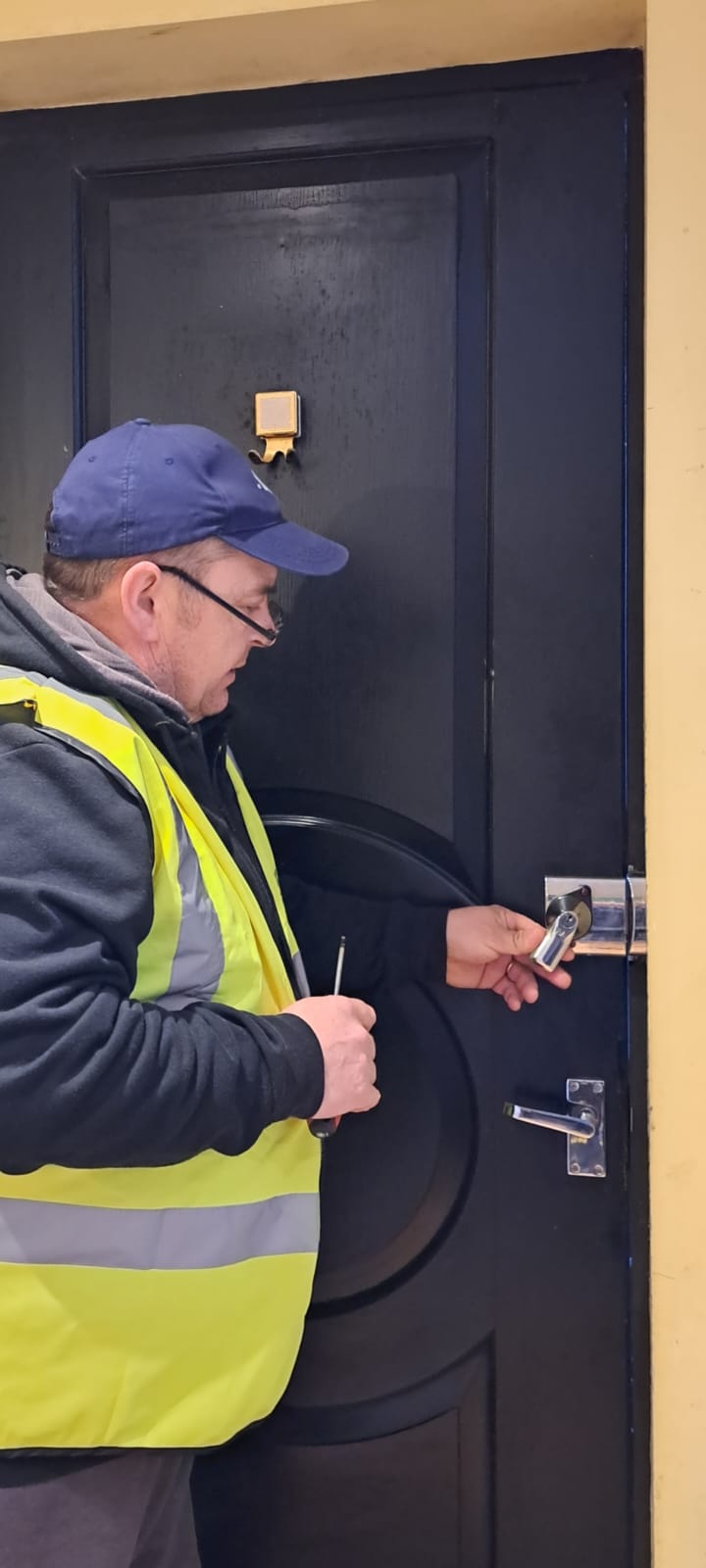
If the padlock is valuable or part of a security system, forcing it can do more harm than good. A licensed locksmith can often bypass or rekey the padlock non‑destructively, preserving security and avoiding damage to gates, chains, or lockers.
Locksmith Tip
Once opened, replace the old padlock with a weather‑resistant, hardened‑steel model and always record spare key numbers securely.