
When a window’s locking mechanism breaks, it’s not just annoying; it also compromises your home’s security and insulation. These issues are common in uPVC, timber, and aluminium frames and can usually be repaired without replacing the entire window.
Common Causes
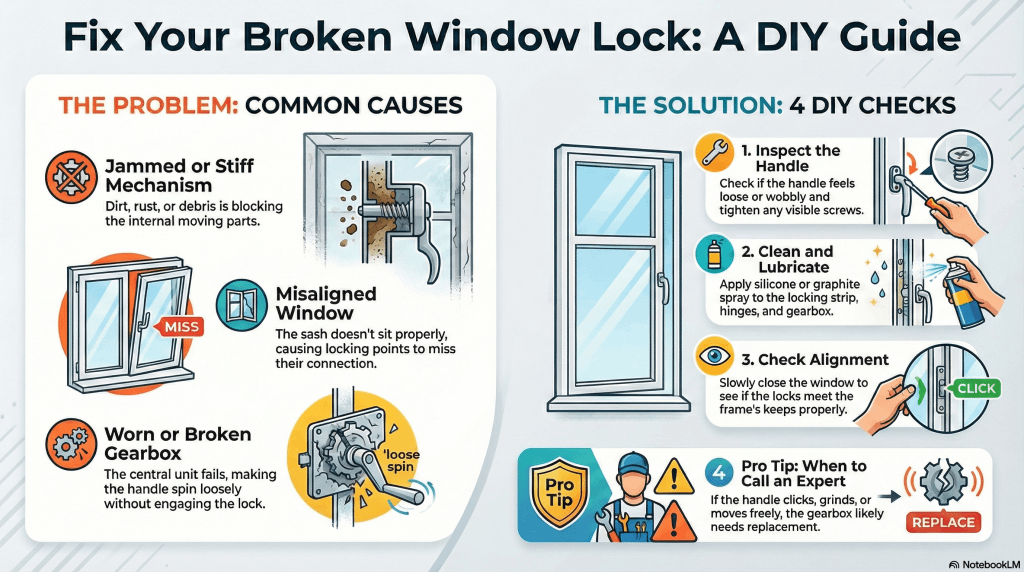
Jammed or stiff lock:
Dirt, rust, or debris inside the mechanism can block movement or cause stiffness.
Misalignment:
If the sash isn’t sitting properly in the frame, the locking points can miss the keeps, leaving the window insecure.
Worn or broken gearbox:
This is the central mechanical unit that controls multi‑point locks; if it fails, the handle may spin loosely or stop engaging.
Loose handle or screws:
Continuous use loosens fittings, which can cause the locking pins not to retract or extend correctly.
Corrosion:
Especially in coastal or damp areas, rust inside the mechanism can seize the components.
Step‑by‑Step DIY Checks
#1. Inspect the handle:
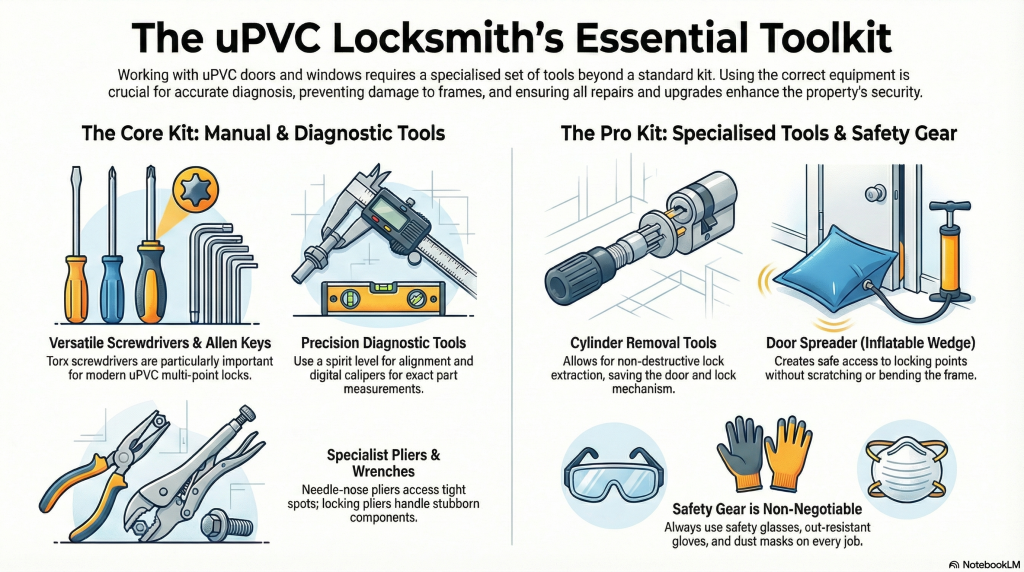
If it feels loose or wobbly, tighten the visible screws beneath the plastic caps.
#2. Clean and lubricate:
Use a soft cloth and mild cleaner to remove dirt, then apply silicone or graphite spray to the espag (locking strip), hinges, and gearbox.
#3. Check alignment:
Close the window slowly, if the locks don’t meet the keeps properly, adjust the hinges slightly using an Allen key to raise, lower, or lateral‑shift the sash.
#4. Test the gearbox:
Turn the handle; if it clicks, grinds, or moves freely without locking, the internal gearbox likely needs replacement.
#5. Replace broken parts:
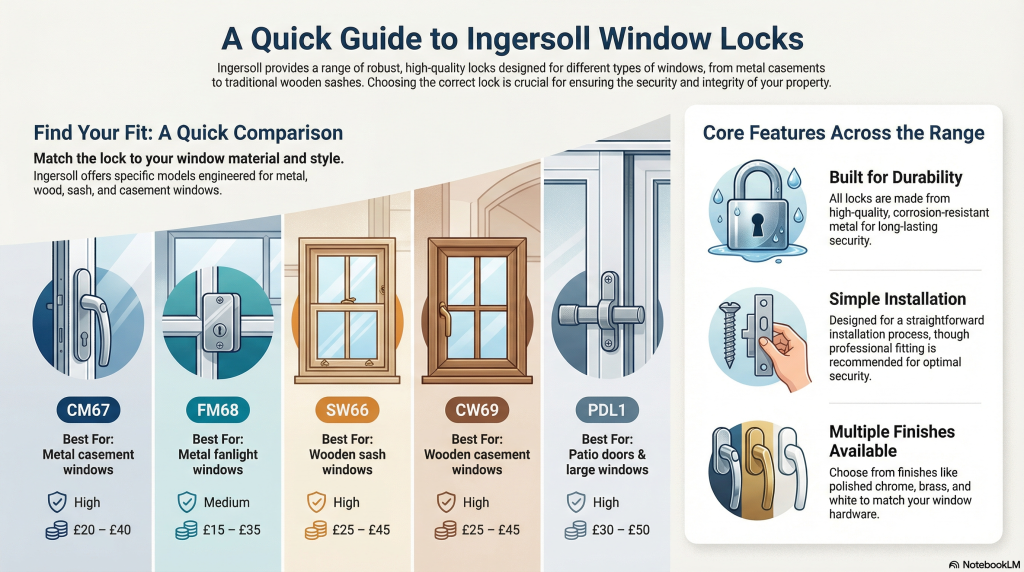
Unscrew the old handle or mechanism, take it to a hardware supplier, and match the part model. You’ll find that most are brand‑specific, like Maco, Mila, or Nico mechanisms.
Locksmith Tip
When replacing a window lock, always identify the backset measurement (i.e., the depth from the frame edge to the spindle centre). This ensures a precise fit and prevents air gaps. If you’re unsure, a locksmith or glazing technician can replace the lock in under an hour while checking the frame alignment and weather seal integrity.
Regular cleaning, alignment checks, and lubrication every few months can prevent future lock failures and keep your windows secure, smooth, and energy‑efficient.