
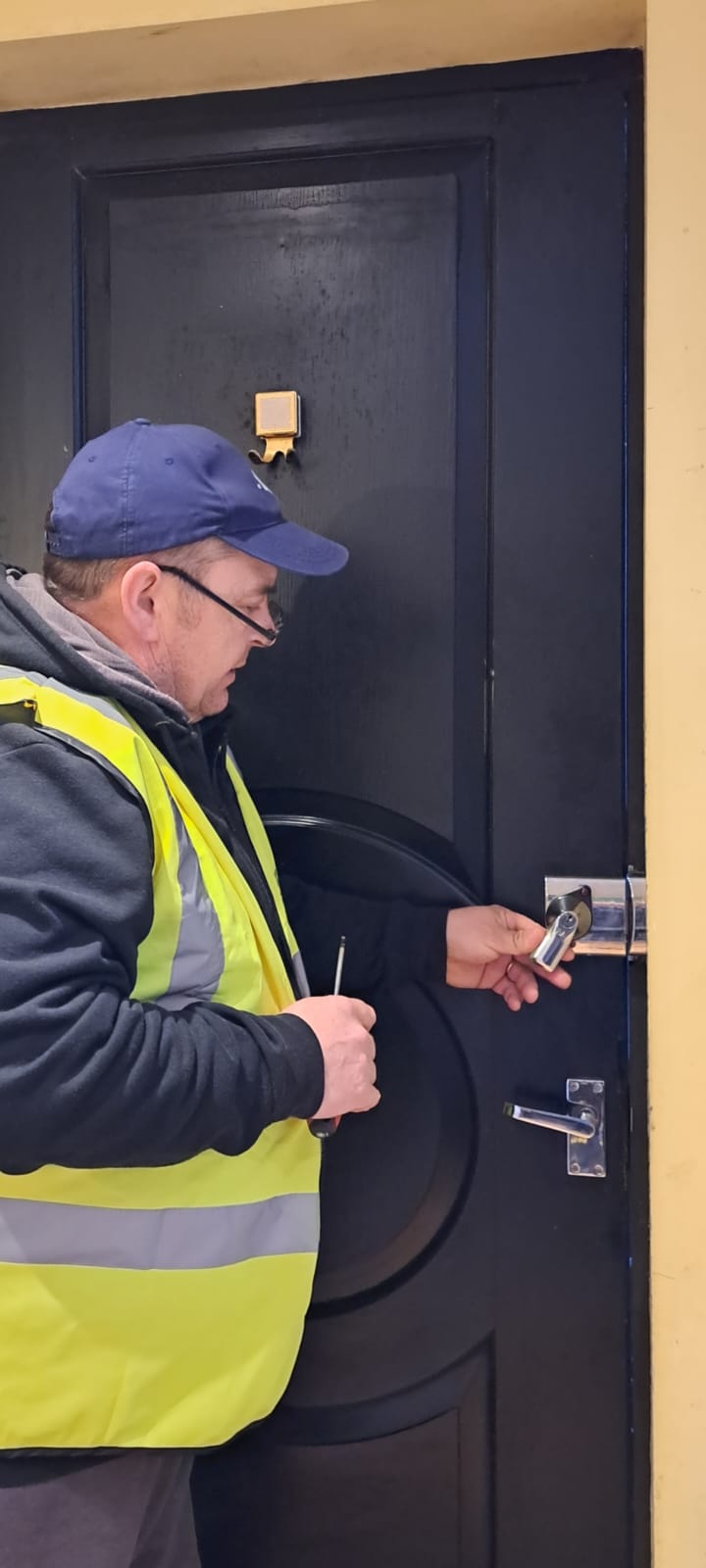
When the mechanism inside an internal door lock fails, it can leave you stuck, frustrated, or even locked in a room. These failures are common in everyday handles and bedroom or bathroom locks, as constant use wears down internal parts over time. Fortunately, most issues can be repaired without replacing the whole door.
Common Causes
Worn internal springs:
Over time, small tension springs lose strength, leading to floppy or unresponsive handles.
Snapped spindle:
The square bar connecting both handles can shear or round off, stopping the latch from retracting.
Misaligned latch or strike plate:
Poor alignment makes the latch jam or prevents it from catching at all.
Broken latch mechanism:
Internal parts inside the tubular latch or mortice case can stick or snap after long use.
Loose screws or corrosion:
Constant strain or damp conditions can make screws come loose or freeze mechanisms inside the door.
DIY Steps to Fix the Issue
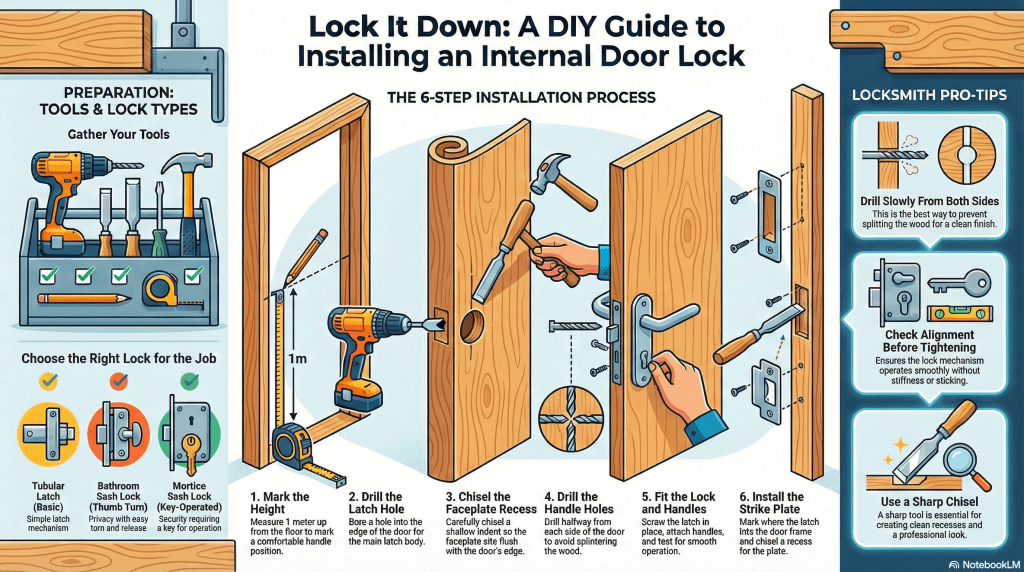
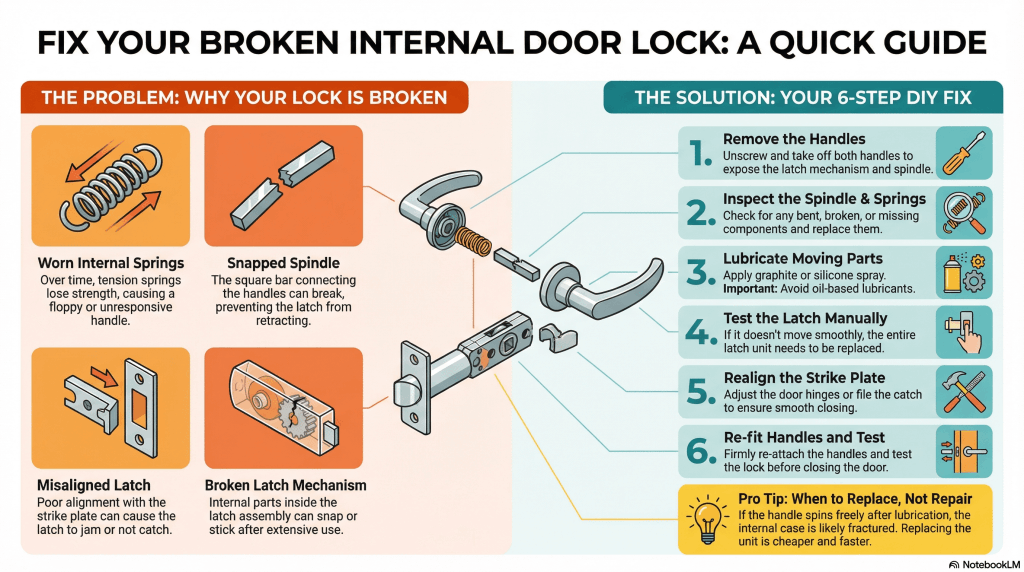
#1. Unscrew and remove the handles. This exposes the latch body and spindle bar.
#2. Check the spindle and spring action. Replace any bent, broken, or missing components.
#3. Apply graphite or silicone spray (avoid oil‑based lubricants) to the moving parts of the latch.
#4. Test the latch manually. If it doesn’t retract smoothly, remove and replace the full latch unit.
#5. Realign the strike plate. Adjust hinge positions or file the catch slightly to ensure smooth closure.
#6. Re‑fit handles firmly and test operation before closing the door.
Locksmith Tip
If your handle spins freely or the latch remains stuck after lubrication, the internal case has likely fractured. Internal lock mechanisms are inexpensive—replacing them is often faster and cheaper than stripping and repairing. A locksmith can fit a new mortice or tubular latch in minutes, restoring proper function and preventing further door damage