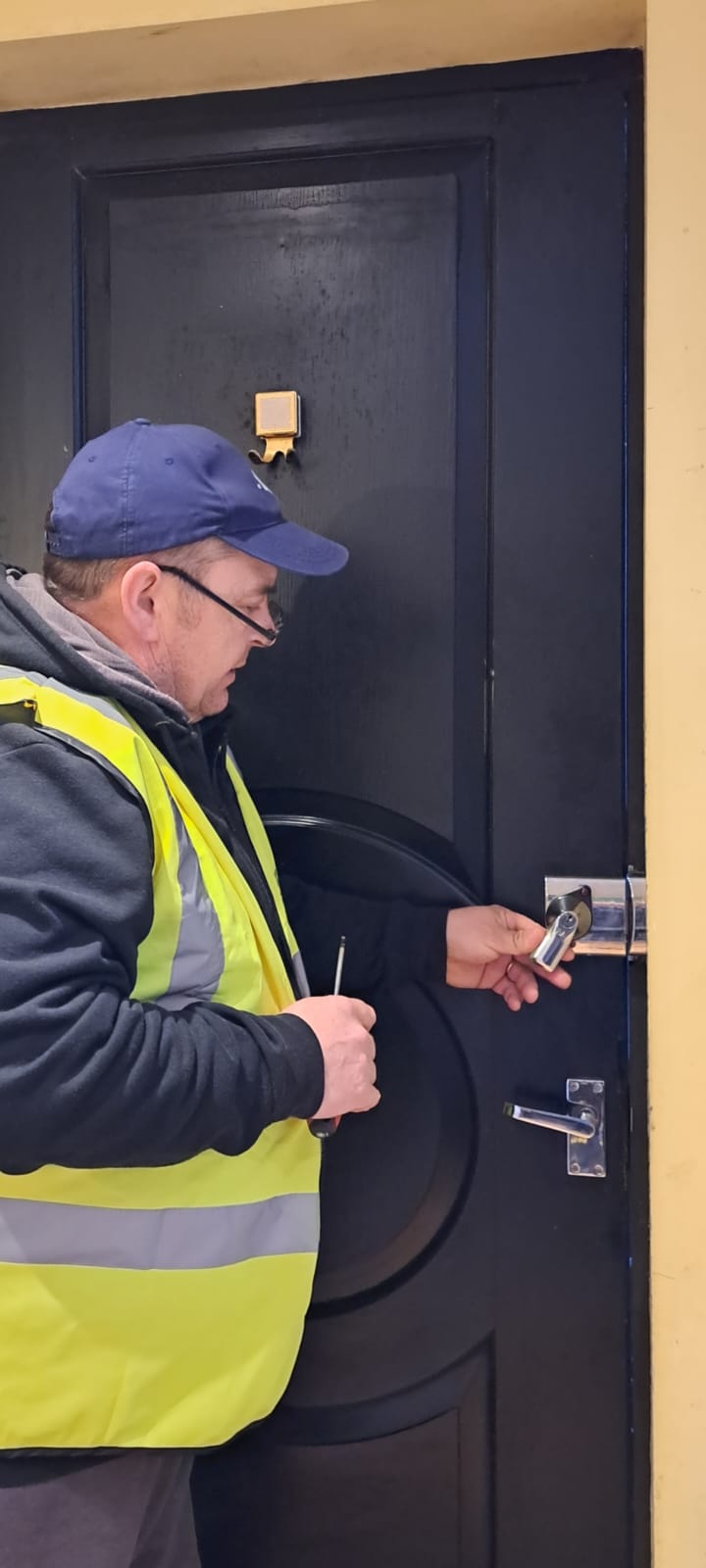
Patio doors offer light and outdoor access, but they can be a weak point in home security. If your sliding or French patio door feels loose, jams, or uses old-style locks, it could be time to upgrade or replace it for smoother use and added protection.
When to Change a Patio Door Lock
- Misaligned door or stiff locking handle.
- Lost keys or broken cylinder.
- Visible wear, rust, or damaged hook mechanisms.
- Weak multi‑point system, reducing door seal and security.
Common Lock Types
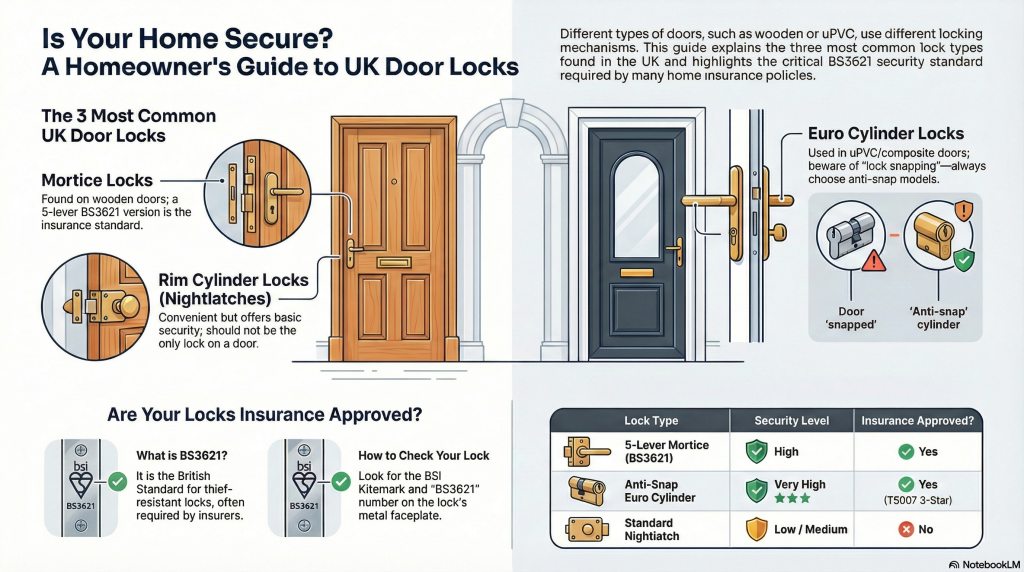
Here are some common lock types you can use to solve your door lock problems.
Multi‑Point Locks:
Found on most modern sliding or uPVC doors. Look at several points when the handle lifts. Replace worn gearboxes if the mechanism sticks.
Euro Cylinder Locks:
Located in the centre handle. Choose anti‑snap, anti‑drill, and anti‑bump models for better security.
Hook Bolt or Deadbolt Systems:
Used on high‑end aluminium or wooden doors. Hooks engage the frame, preventing lifting or forced entry.
Patio Door Clamps or Bars:
Optional add‑on for extra reinforcement, especially on older sliding doors.
Tools & Materials required
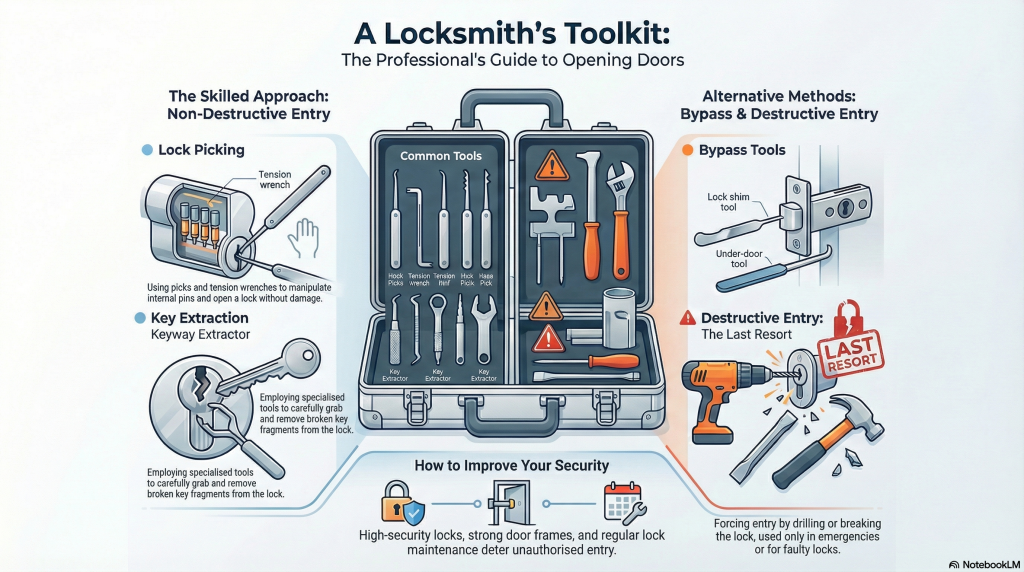
Screwdrivers, a new cylinder or mechanism, a tape measure, Allen keys, lubricant, and a soft cloth. Always measure the cylinder precisely. If you make replacements that are longer than the door face, it can be a security risk.
Quick Locksmith Tips
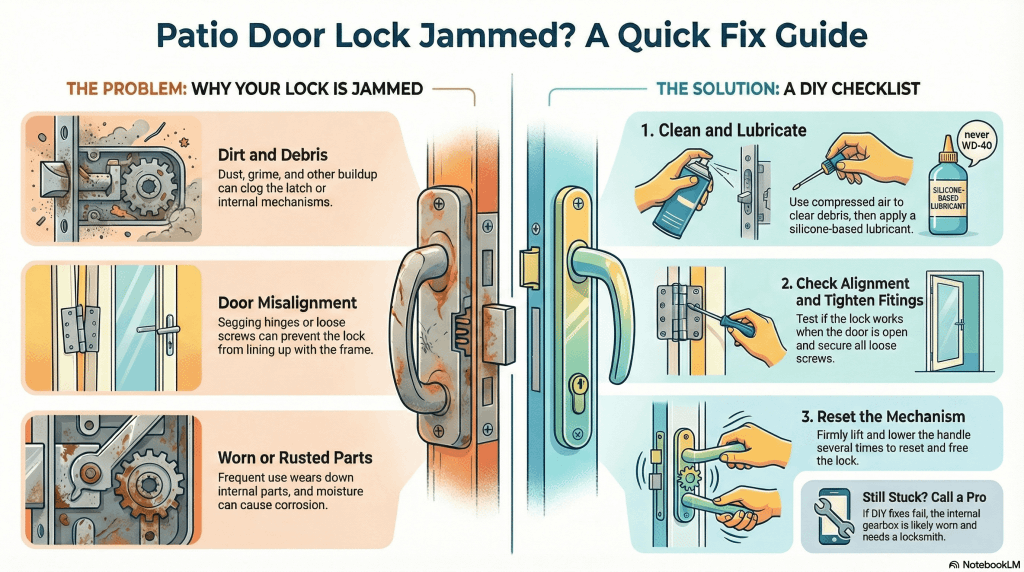
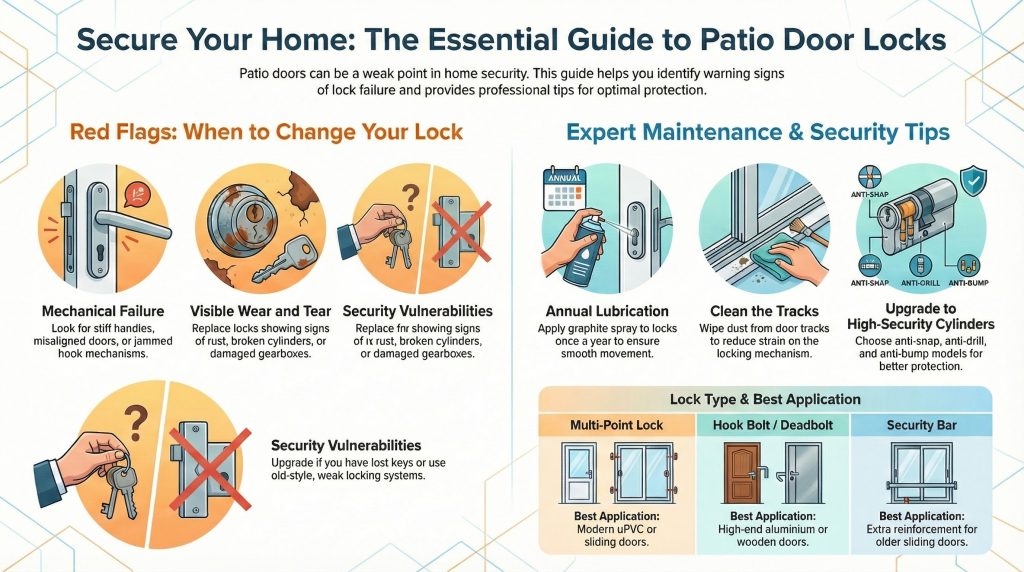
- Lubricate locks with graphite spray annually.
- Wipe tracks free of dust to reduce mechanism strain.
- Add a patio door security bar for extra peace of mind.
- Always test the locking and sliding action before tightening screws fully.
- A secure, smooth patio lock keeps your home quiet, easy to use, and adequately protected.
- If you think the job is beyond your skill level, call your local locksmith.