Introduction to Locksmith Tools
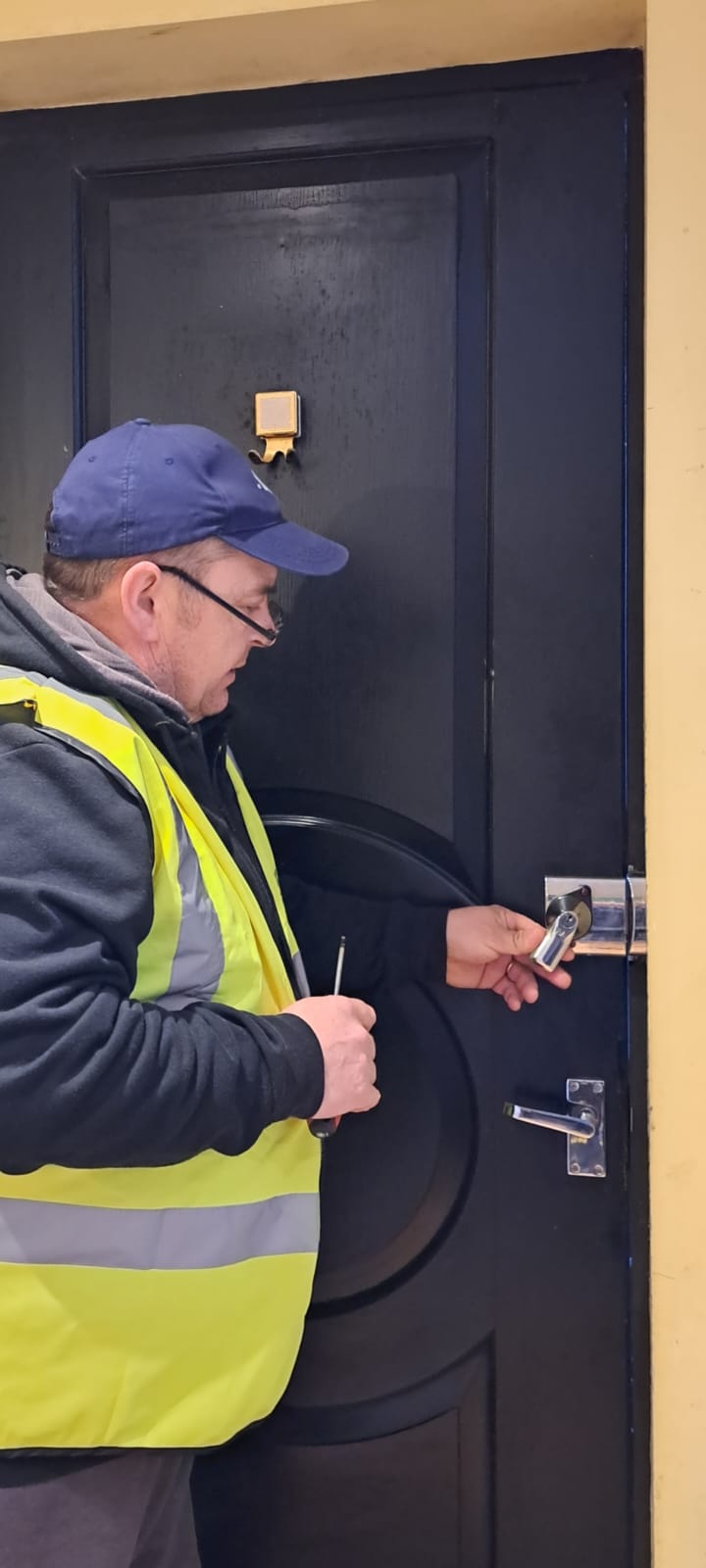
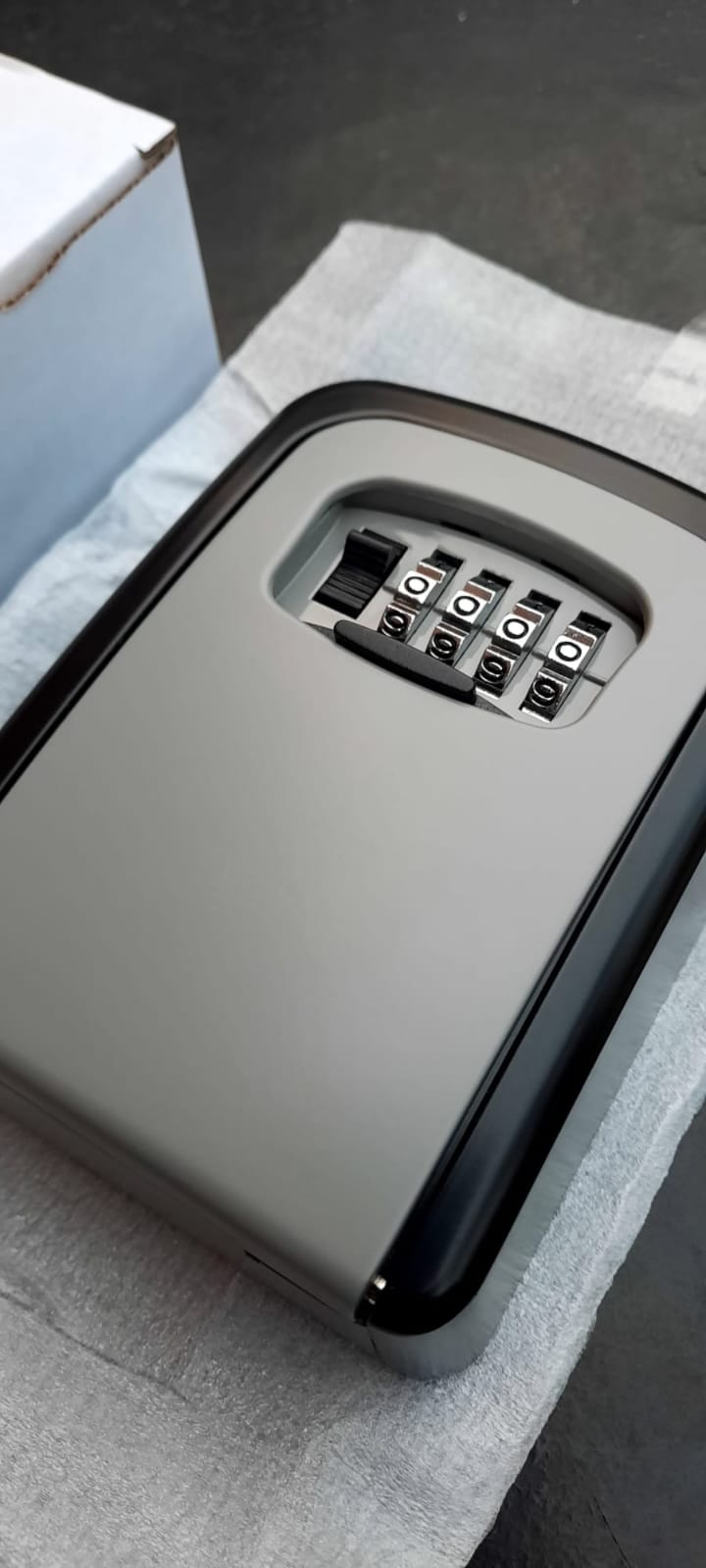
Locksmiths are skilled security pros. They can bypass locks, often opening front doors when keys are lost or broken. Their toolkits are full of specialized tools for different locks and situations. Understanding these tools shows how locksmiths help with home security.
Key Points
- ✓Lock picks – Manually open locks.
- ✓Tension wrenches – Add pressure while picking.
- ✓Try-out keys – Fit many similar locks.
- ✓Bump keys – “Bump” lock pins open.
- ✓Drills – Bypass locks by drilling.
- ✓Key extractors – Remove broken keys.
- ✓Lock shims – Bypass latch mechanisms.
- ✓Specialty tools – For specific locks.
Detailed Breakdown
| Aspect | Details | Notes |
|---|---|---|
| Lock Picks | Thin tools to move pins or wafers inside a lock. They come in many shapes for different locks. | Takes practice to use well. |
| Tension Wrenches | L-shaped tools that add torque while picking. This helps move the pins. | Needed for lock picking. |
| Try-out Keys | Keys made to fit many locks. They give quick access to common locks. | Not for high-security locks. |
| Bump Keys | Keys cut to max depth. They “bump” pins open when hit. | Works on some pin tumbler locks. |
| Drills | Power tools to drill through locks. This breaks the lock and opens the door. | A last resort, can cause damage. |
| Key Extractors | Tools to remove broken keys without damage. They fit different keyways. | Needed for broken keys. |
| Lock Shims | Thin metal or plastic to bypass the latch. Works on doors with weak latches. | Works on basic door locks. |
| Plug Spinners | Tools to turn the lock cylinder after picking. This opens the door faster. | Saves time in some cases. |
Lock Picking Tools
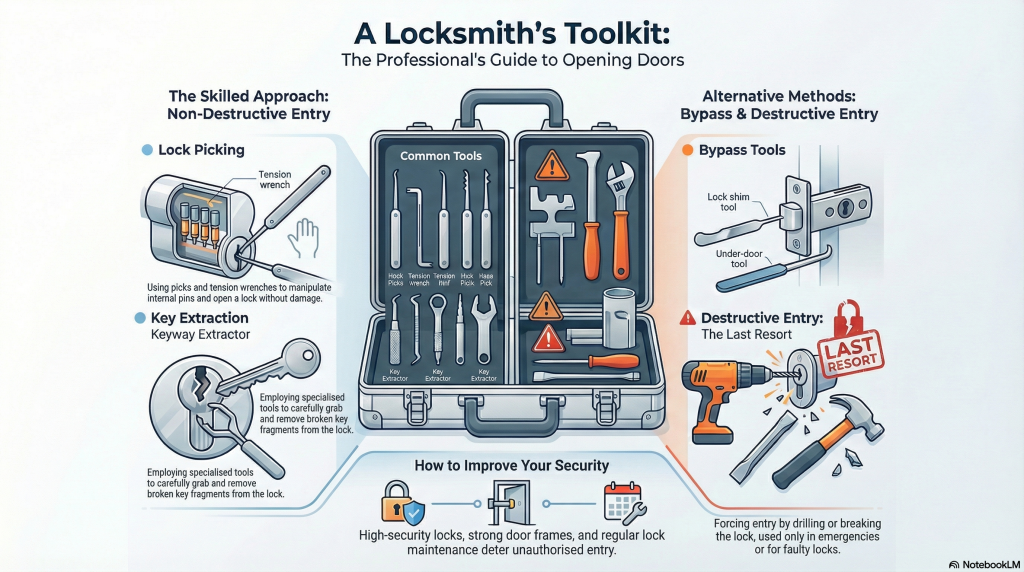
Lock picking needs skill and knowledge of locks. Locksmiths use picks and tension wrenches to move parts inside the lock without damage. This is good when you don’t want to replace the lock.
Key Points
- ✓Hook picks – Lift pins in a lock.
- ✓Diamond picks – Rake many pins at once.
- ✓Ball picks – Like hook picks, but with a round tip.
- ✓Rake picks – Quickly set pins in place.
- ✓Half-diamond picks – Both diamond and hook.
- ✓Warded picks – Open warded locks.
- ✓Tension wrench – Important for torque.
- ✓Picking skills – Change with the lock.
Detailed Breakdown
| Aspect | Details | Notes |
|---|---|---|
| Hook Picks | Curved picks to lift pins in a pin tumbler lock. They come in sizes for different locks. | Good for moving pins with care. |
| Diamond Picks | Picks with a diamond tip. They rake many pins at once. Good for quick opening. | Be careful not to overset pins. |
| Ball Picks | Like hook picks with a round tip. Easy to move inside the lock. Good for tight locks. | Easy for beginners to use. |
| Rake Picks | Picks to quickly rake across pins. Good for simple pin locks. | Not good for high-security locks. |
| Half-Diamond Picks | Both diamond and hook picks. Good for raking and moving pins. A good choice for locksmiths. | Takes practice to learn both. |
| Warded Picks | Picks for warded locks. These locks have blocks that stop normal picks. | Needed for warded locks. |
| Tension Wrench | How you place and push the tension wrench is key. Too much or too little stops the lock from opening. | Takes skill and feel for the lock. |
| Picking Skills | Lock picking changes with the lock. Some skills pick one pin, others rake or impress. | Keep learning and practicing. |
Bypass Tools
Bypass tools go around the lock. They let locksmiths open doors without picking or damage. These tools use weak spots in the lock. They work well, but you need to know lock security and ethics.
Key Points
- ✓Lock shims – Bypass latches on some doors.
- ✓Air wedges – Make a gap between door and frame.
- ✓Under-door tools – Move the handle from below.
- ✓Credit card – Depress the latch.
- ✓Latch slip – Depress the latch between door and frame.
- ✓Electro-picks – Vibrate pins to pick the lock.
- ✓Impressioning tools – Make a key from marks in the lock.
- ✓Master keys – Open many locks in a system.
Detailed Breakdown
| Aspect | Details | Notes |
|---|---|---|
| Lock Shims | Thin strips to bypass the latch. They go between the door and frame. | Works on doors with weak latches. |
| Air Wedges | Wedges that blow up to make a gap. This lets you use other tools. | Good for making space to work. |
| Under-the-Door Tools | Tools to move the handle from under the door. Works on lever handles. | Needs space under the door. |
| Credit Card | Use a card to depress the latch. Works on doors with beveled latches. | Needs skill and care. |
| Latch Slip | A tool to depress the latch. Like a shim, but stronger. | Works on simple latches. |
| Electro-picks | Tools that vibrate pins to pick the lock. Good for some locks. | Takes practice to use. |
| Impressioning Tools | Tools to make a key from marks in the lock. Takes skill. | Makes a key without taking the lock apart. |
| Master Keys | Keys that open many locks. Locksmiths use them to access property. | Needs permission and papers. |
Destructive Entry Tools
When other ways fail, locksmiths might break the lock. This damages the lock or door to get in. It’s not good, but needed in emergencies or with bad locks.
Key Points
- ✓Drills – Drill through the lock.
- ✓Bolt cutters – Cut padlocks and chains.
- ✓Crowbars – Force open doors.
- ✓Sledgehammers – Break down doors.
- ✓Lock breakers – Break open locks.
- ✓Rotary saws – Cut metal doors.
- ✓Hydraulic spreaders – Pry open doors.
- ✓Explosives – Only for experts in extreme cases.
Detailed Breakdown
| Aspect | Details | Notes |
|---|---|---|
| Drills | Power tools to drill through the lock. This breaks the lock and opens the door. | A last resort, can damage the door. |
| Bolt Cutters | Tools to cut padlocks and chains. Good for quick removal. | Only cuts thin stuff. |
| Crowbars | Tools to force open doors. Can damage the door frame. | Used with other tools. |
| Sledgehammers | Heavy hammers to break doors. Good in emergencies, but cause damage. | Needs strength to use. |
| Lock Breakers | Tools to break open locks. Used by police. | Works well, but for some locks only. |
| Rotary Saws | Power tools to cut metal doors. Good for strong doors. | Can cause sparks and fire. |
| Hydraulic Spreaders | Tools to pry open doors. Used by firemen. | Can damage the building. |
| Explosives | Only used by experts in bad cases. They break through, but are risky. | Needs training and permits. |
Key Extraction Tools
Locksmiths often remove broken keys. Key extractors grab and remove key parts without hurting the lock. These tools fix key problems fast.
Key Points
- ✓Key extractors – Grab and pull out key pieces.
- ✓Tweezers – Grab small key parts.
- ✓Pliers – Grab larger key parts.
- ✓Lubricants – Loosen stuck keys.
- ✓Vise grips – Twist broken keys.
- ✓Special extractors – For some locks.
- ✓Heat guns – Heat the lock to loosen keys.
- ✓Care and skill – Needed to remove keys.
Detailed Breakdown
| Aspect | Details | Notes |
|---|---|---|
| Broken Key Extractors | Tools to grab and pull out broken keys. They come in sizes for different locks. | Needed to remove keys without damage. |
| Tweezers | Used to grab small key parts. Good for small work. | Needs a steady hand. |
| Needle-Nose Pliers | Used to grab bigger key parts. Stronger than tweezers. | Be careful not to hurt the lock. |
| Lubricants | Used to loosen stuck keys. Use WD-40. | Use a little to avoid damage. |
| Vise Grips | Used to twist stuck keys. Strong grip. | Be careful not to break the key more. |
| Specialized Key Extractors | For some locks. Better than normal extractors. | May need a set of these. |
| Heat Guns | Used to heat the lock and loosen keys. Heat helps the metal expand. | Be careful not to overheat. |
| Patience and Precision | Needed to remove keys. Rushing can hurt the lock. | Take your time and be careful. |
Specialized Locksmith Tools
Locksmiths use special tools for some locks. These tools need training to use. They help locksmiths fix hard security problems.
Key Points
- ✓Safe tools – Open safes without damage.
- ✓Car tools – Open car doors.
- ✓Tubular picks – Open tubular locks.
- ✓Wafer picks – Open wafer locks.
- ✓Magnetic picks – Open magnetic locks.
- ✓Electronic programmers – Program electronic locks.
- ✓Code cutters – Cut keys from codes.
- ✓Duplicating machines – Copy keys.
Detailed Breakdown
| Aspect | Details | Notes |
|---|---|---|
| Safe Cracking Tools | Tools to open safes without damage. These need knowledge of safes. | Used by safe experts. |
| Auto Entry Tools | Open car doors. These include slim jims and picks. | Needs knowledge of car locks. |
| Tubular Lock Picks | Open tubular locks on vending machines. | Needs a pick for tubular locks. |
| Wafer Lock Picks | Open wafer locks in cars. These move the wafers. | Needs a skill different from pin locks. |
| Magnetic Lock Picks | Open magnetic locks. These use magnets to move parts. | Needs knowledge of magnetic locks. |
| Electronic Lock Programmers | Program electronic locks. These add or remove codes. | Needs knowledge of electronic locks. |
| Code Cutters | Cut keys from codes. These make a key from a code number. | Needs access to key codes. |
| Duplicating Machines | Copy keys. These trace the key and cut a new one. | Needed for copying keys. |
Security Considerations
Locksmiths help keep homes safe. Knowing their tools shows why you need good locks. Regular care can stop break-ins and protect your home.
Key Points
- ✓High-security locks – Hard to pick.
- ✓Strong door frames – Stop forced entry.
- ✓Security systems – Add protection.
- ✓Lock care – Keeps locks working.
- ✓Key control – Stops key copying.
- ✓Expert install – Makes sure locks work.
- ✓Know weak spots – Helps fix problems.
- ✓Ask a locksmith – For security advice.
Detailed Breakdown
| Aspect | Details | Notes |
|---|---|---|
| High-Security Locks | Hard to pick and bump. They have strong parts. | Use these on doors that are easy to break into. |
| Reinforced Door Frames | Make doors harder to kick in. Use strong plates. | Reinforce doors to the outside. |
| Security Systems | Add protection. Alarms and cameras stop thieves. | Pick a system that fits your needs. |
| Regular Lock Maintenance | Keeps locks working well. Oil locks often. | Care can stop locks from breaking. |
| Key Control | Stops key copying. Limit who has keys. | Have a key plan to protect your home. |
| Professional Installation | Makes sure locks work right. A locksmith can install locks well. | Hire a good locksmith to install locks. |
| Awareness of Vulnerabilities | Helps find weak spots in your security. Check locks for damage. | Look for security problems. |
| Consulting with a Locksmith | Gives expert security advice. A locksmith can help protect your home. | Ask a locksmith for advice. |
Cost of Locksmith Services
Locksmith costs change based on the service, lock type, and time. Emergency calls cost more. Knowing the costs helps you plan and avoid surprises.
Key Points
- ✓Service – Lockout, repair, replace, extract keys.
- ✓Lock type – Simple vs. high-security.
- ✓Time – After hours costs more.
- ✓Location – Cities cost more.
- ✓Travel – Locksmiths may charge for travel.
- ✓Parts – New locks and keys cost extra.
- ✓Labor – The locksmith’s fee.
- ✓Hidden fees – Watch out for extra fees.
Detailed Breakdown
| Aspect | Details | Notes |
|---|---|---|
| Service Type | The service changes the cost. Lockouts are cheaper than replacing locks. | Tell them what you need. |
| Lock Complexity | Simple locks cost less to fix. High-security locks need special tools. | Tell them what kind of lock you have. |
| Time of Day | After hours costs more because of higher pay. | Think about the time when you call. |
| Location | Cities cost more because of costs and competition. | Compare prices in your area. |
| Travel Fees | Locksmiths may charge for travel. Ask about travel costs. | Ask about travel costs before they come. |
| Parts and Materials | New locks and keys add to the cost. Ask for a list of costs. | Compare prices for parts. |
| Labor Costs | The locksmith’s fee is a big part of the cost. Ask about labor rates. | Know how they charge for labor. |
| Hidden Fees | Watch out for extra fees. Get a clear price before they start. | Read the fine print and ask questions. |
Comparison Overview
| Item | Type | Pros | Cons | Best For |
|---|---|---|---|---|
| Hook Pick | Lock Picking | Good pin control, useful | Takes skill | Pin tumbler locks |
| Diamond Pick | Lock Picking | Quick, works on simple locks | Can overset pins | Simple pin locks |
| Tension Wrench | Lock Picking | Needed for torque | Needs good placement | All lock picking |
| Lock Shim | Bypass Tool | Easy to use, works on weak latches | Only works on some doors | Weak latches |
| Air Wedge | Bypass Tool | Makes space for tools | Can hurt the door | Making space |
| Under-the-Door Tool | Bypass Tool | Moves handles from below | Needs space below | Lever handles |
| Drill | Destructive Entry | Fast, works on most locks | Hurts the lock and door | Emergencies |
| Bolt Cutters | Destructive Entry | Cuts padlocks | Only cuts thin stuff | Padlocks |
| Key Extractor | Key Extraction | Removes keys without damage | Needs skill | Broken keys |
| Tweezers | Key Extraction | Removes small parts | Needs steady hand | Small parts |
| Tubular Lock Pick | Specialized Tool | Opens tubular locks | Only for tubular locks | Vending machines |
| Wafer Lock Pick | Specialized Tool | Opens wafer locks | Only for wafer locks | Cars |
| Bump Key | Bypass Tool | Opens some pin locks fast | Not for high-security | Pin tumbler locks |
| Electro-Pick | Bypass Tool | Opens some locks fast | Needs practice | Some pin locks |
Frequently Asked Questions
What does a locksmith do?
Locksmiths work with locks and security. They open locked doors, fix locks, cut keys, and install security systems. They work on homes, businesses, and cars, helping with lockouts and security.
How much does a locksmith cost?
Locksmith costs change based on the service, lock, time, and place. Simple lockouts may cost £50-£150. Lock replacement can cost £150-£500 or more. Emergency calls cost more.
What is the best way to find a reputable locksmith?
Check online reviews, ask friends, and check their license. Make sure they have insurance and give clear prices. A good locksmith will give a quote and stand by their work.
What should I do if I’m locked out of my house?
First, check for open windows or spare keys. If not, call a good locksmith. Show them proof you live there to make sure they open the door for the owner.
Can a locksmith open any type of lock?
Locksmiths can open many locks, but some high-security locks need special tools. A locksmith will check the lock and pick, bypass, or break it as a last resort.
How can I improve my home security?
Use high-security locks, strong door frames, and a security system. Care for your locks and control your keys. Ask a locksmith for security advice.
Are bump keys illegal?
Bump key laws change. It may be legal to own them, but not to use them to break in. Locksmiths use them for work, but owning them can be suspicious.
How often should I replace my locks?
Replace locks every 7-10 years, or if they are broken or after a break-in. Also, replace locks when you move to a new home or lose your keys.
Contact Locksmith For London Today
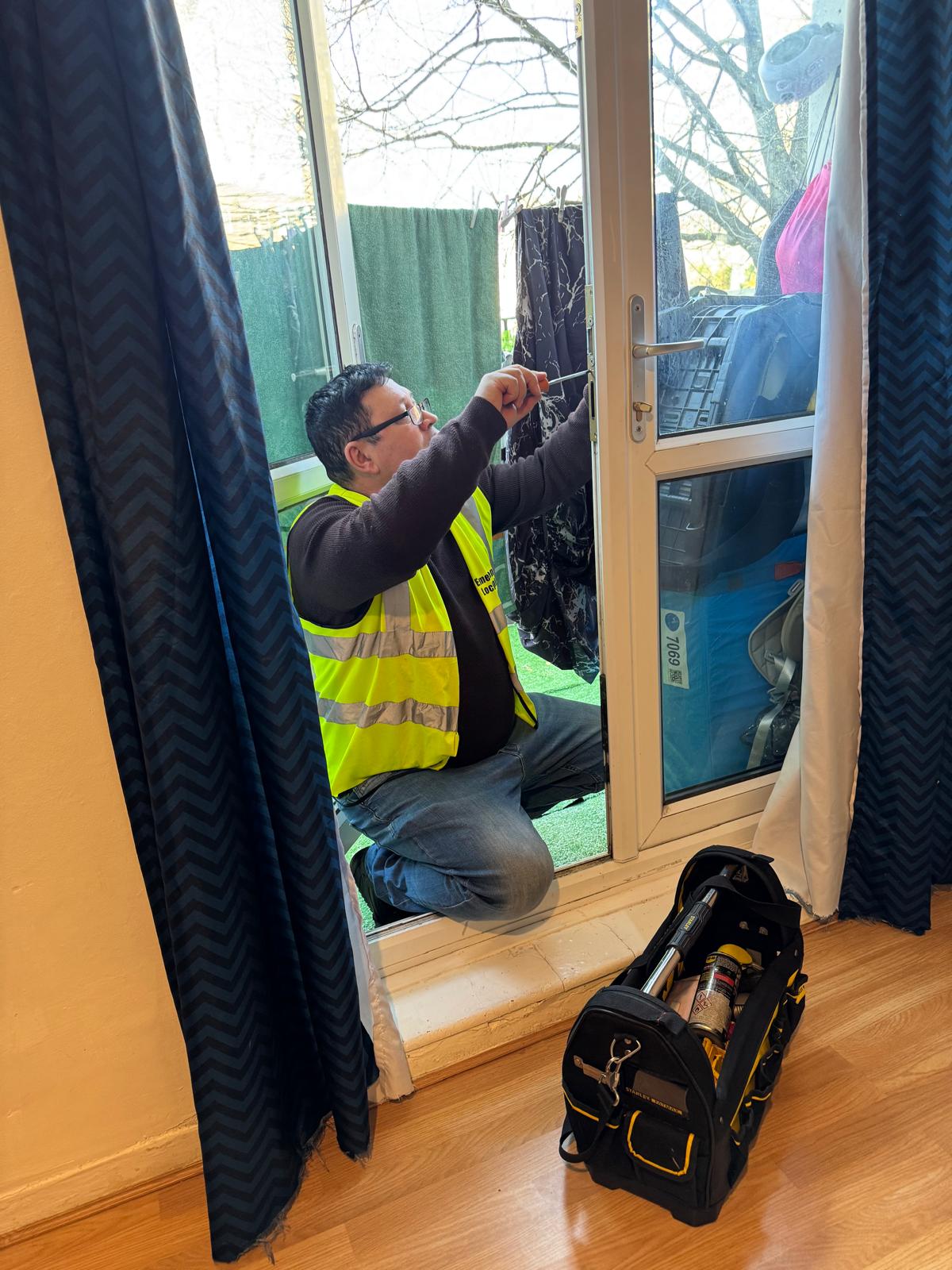
Looking for safe opening and locksmith services in London? Contact Locksmith For London for expert assistance. We also provide 24/7 emergency services and affordable solutions across London.